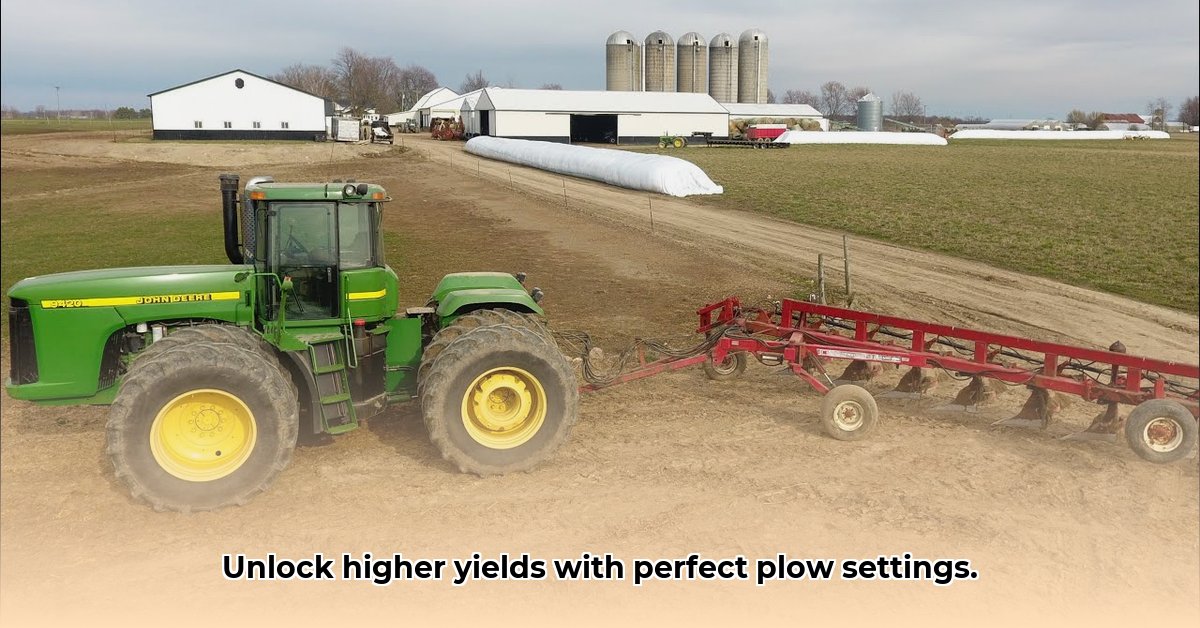
Plow on Tractor: Mastering Your Tractor Plow for Bumper Crops
Getting the most from your moldboard plow means more than just hooking it up and going. Healthy soil from a well-executed plowing job translates directly into better harvests. Ready to become a plowing pro? Let's dig in! For smaller tractors, consider a smaller tiller.
Pre-Plowing Prep: A Sharp Plow Makes a Happy Farmer
Before hitching up, thoroughly inspect your plow. Dull plowshares lead to uneven furrows, wasted fuel, and frustration. Sharpen or replace worn shares. Check the frog (the plow's main structural part); a bent frog significantly impacts performance. Grease moving parts – preventative maintenance pays off. This pre-plowing check saves headaches. Isn't efficiency key to maximizing your yield?
Setting Up Your Tractor Plow: Finding the Goldilocks Zone
Correct hitch setup is crucial. Think of it like aiming a rifle—small errors mean big results. The plow angle is key: too shallow, and it scrapes; too deep, and your tractor struggles. Adjust the top link to fine-tune this angle. It's iterative: make small adjustments, observe, and repeat until optimal. Rushing this step will result in uneven furrows.
Your leveling crank also plays a critical role. It controls side-to-side alignment, ensuring uniform furrow depth. Small adjustments are often enough to create a big difference. Like the top link, this requires iterative adjustment until consistent results are achieved.
Plowing Techniques: The Art of the Perfect Furrow
Maintain a consistent speed while plowing. Too fast, and the plow skims; too slow, and your tractor struggles. Slightly overlap furrows to avoid gaps – the amount depends on your plow's width. These techniques are the foundation of successful plowing. It's a skill honed with practice; patience and attention to detail are vital.
Should you use coulters (small discs in front of the plow)? It depends. Some farmers value cleaner furrow walls, while others find them hindering penetration in heavier soil. Experiment to see what suits your land and equipment.
Quantifiable Fact: Consistent furrow depth and width are key to even seedbeds, making planting and harvesting easier and more efficient.
Soil Sense: Adapting to Your Field's Personality
Soil condition heavily influences plow performance. Hard, dry soil requires a shallower depth and slower speeds. Conversely, wet, heavy soil may need more power and adjustments for consistent furrow depth. Adaptability is key to the art of successful tilling.
Post-Plowing Review: Lessons Learned and Improvements Gained
After each pass, assess your work. Were the furrows even? What adjustments could improve results? This reflection refines your technique over time. Each pass teaches and improves how you proceed.
Troubleshooting Common Tractor Plow Problems
This table summarizes common issues, causes, and solutions:
| Problem | Possible Causes | Solutions |
|---|---|---|
| Uneven Furrow Depth | Incorrect top link or leveling crank, worn parts | Adjust the top link and leveling crank; inspect and replace worn parts. |
| Poor Penetration | Dull plowshares, hard soil, incorrect depth setting | Sharpen or replace plowshares; adjust plowing depth or speed. |
| Side-to-Side Drift | Uneven ground, incorrect leveling adjustment | Adjust leveling crank; consider pre-leveling the ground. |
| Excessive Soil Disturbance | Plowing too deep, incorrect settings | Adjust to a shallower depth; experiment with different settings. |
Mastering your tractor plow takes practice and attention to detail. Experiment, make those small adjustments, and you'll achieve consistent, high-quality plowing for bumper harvests.
How to Adjust Moldboard Plow for Different Soil Types
Key Takeaways:
- Proper plow adjustment is crucial for efficient plowing and soil health.
- Optimal plow depth is generally about half the plow bottom width.
- Soil type and moisture significantly impact plow settings.
- Worn plowshares reduce efficiency and should be promptly replaced.
- Proper top link adjustment ensures straight plowing.
- Employ sustainable practices to minimize soil disturbance.
Mastering your moldboard plow involves understanding how to adjust it for different soil types. It's not a one-size-fits-all solution. Let’s break down how to fine-tune your plow for peak performance.
Assessing Your Soil
Before adjusting the plow, assess your soil. Is it heavy clay, sandy loam, or something else? Soil moisture is also crucial. Dry soil needs different settings than wet soil. Think of it like this: Trying to plow dry clay with the same settings as moist sand is inefficient and could damage equipment.
Setting the Plow Depth
Aim for a depth roughly half the width of your plow bottom. Too shallow, and you're not turning the soil effectively. Too deep, increases compaction and fuel use. Your tractor's three-point hitch and top link are key.
- Leveling: Level the plow while attached to your tractor, in the operating position.
- Top Link Adjustment: Adjust the top link to achieve the desired depth. A straight top link generally leads to straight plowing.
- Plow Orientation: The plow's angle (furrow wheel) impacts depth. Experiment to find consistent depth settings.
Dealing with Different Soil Types
Adjusting for various soil types requires understanding their characteristics:
- Heavy Clay: Requires a more aggressive approach: deeper plowing depth and slower speeds to break up the soil.
- Sandy Loam: Needs less aggressive settings: shallower depth and higher speeds.
- Moist vs. Dry: Wet soil tends to stick, requiring adjustments to prevent clogs. Dry soil is harder to plow, requiring slower speeds.
Maintaining Your Plow
Worn plowshares reduce efficiency and lead to uneven plowing. Regularly inspect and replace them as needed. A sharpened plowshare offers far more efficient tilling.
Optimizing Your Technique
Experimentation is key. Start with the guidelines and adjust based on observations. Consider tractor horsepower and speed, especially with smaller tractors. Slower speeds are generally better for smaller tractors, though soil type and plow design all impact these choices. Remember, consistency is key to success.